 Image 1 of 1
Gypsum
Gypsum
Gypsum is a soft sulfate mineral composed of calcium sulfate dihydrate (CaSO4·2H2O). It occurs in a variety of forms and colors, most commonly as translucent, white to gray crystalline masses. Because of its ease of cleavage and low hardness (2 on the Mohs scale), gypsum can be scratched with a fingernail. It forms in sedimentary environments through the evaporation of saline waters and is often found in layered deposits with other evaporite minerals such as halite and anhydrite.
Major Uses
Construction: Gypsum is the principal ingredient in drywall (gypsum boards), plaster, and stucco. Calcined gypsum (gypsum that has been heated to remove part of its water) produces plaster of Paris, which sets quickly when rehydrated and is used for molding, coatings, and architectural details.
Cement and concrete: Gypsum is added to Portland cement in small quantities to control setting time. It acts as a set retarder, preventing flash setting and allowing workable time for placing and finishing concrete.
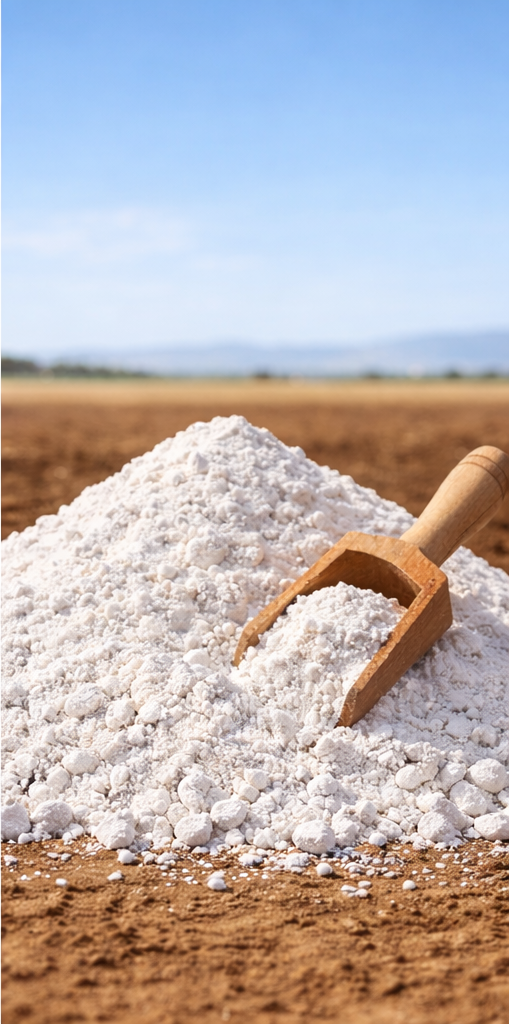
Agriculture: Finely ground gypsum supplies calcium and sulfur to soils, improves soil structure, reduces compaction, and can help displace sodium in sodic soils, enhancing permeability and root growth.
Industrial: Gypsum is used in the manufacture of ceramics, as a filler in paper and paints, and in the food industry in small amounts (e.g., brewing, tofu production) as a calcium additive and firming agent.
Art and medicine: Plaster of Paris is widely used for casts, molds, and sculptural work; dental plaster and surgical casts are common medical applications.
Types and Varieties
Selenite: Transparent, fibrous, or crystalline gypsum often forming large, pane-like crystals.
Satin spar: Fibrous, silky-appearing gypsum with a pearly luster.
Alabaster: Fine-grained, massive gypsum or calcite historically used for carving; gypsum alabaster is softer and whiter.
Anhydrite: A related mineral (CaSO4) without water; when it hydrates it converts to gypsum.
Formation and Occurrence Gypsum typically forms by the evaporation of seawater or saline lake waters in arid climates. It can also form through the hydration of anhydrite or by hydrothermal processes. Major gypsum deposits occur worldwide, including in the United States, Canada, Mexico, Spain, Germany, and China. Some large crystalline selenite specimens are found in caves and evaporite basins.
Physical and Chemical Properties
Chemical formula: CaSO4·2H2O
Mohs hardness: ~2
Specific gravity: ~2.3
Crystal system: Monoclinic
Solubility: Slightly soluble in water; solubility increases with temperature
Thermal behavior: On heating to about 150–170°C, gypsum loses part of its water to form hemihydrate (plaster of Paris); at higher temperatures it converts to anhydrite.
Handling and Safety Gypsum is generally non-toxic and safe to handle. Fine gypsum dust can irritate eyes and respiratory passages; use dust control measures and respiratory protection when cutting, sanding, or working with large amounts of powdered gypsum. Disposal follows standard nonhazardous waste practices.
Environmental and Sustainability Considerations Gypsum extraction and processing consume energy and can disturb landscapes. Synthetic gypsum, a byproduct of flue-gas desulfurization from coal-fired power plants and other industrial processes, provides a recycled source that reduces waste and conserves natural deposits. Proper management of gypsum drywall waste in construction and renovation prevents landfill overuse and allows for material recovery and recycling where facilities exist.
Key Takeaway Gypsum is a versatile, widely available mineral essential to construction, agriculture, industry, and the arts. Its low hardness and water content give it unique properties exploited across numerous applications, while recycled sources and responsible use help mitigate environmental impact.
Gypsum
Gypsum is a soft sulfate mineral composed of calcium sulfate dihydrate (CaSO4·2H2O). It occurs in a variety of forms and colors, most commonly as translucent, white to gray crystalline masses. Because of its ease of cleavage and low hardness (2 on the Mohs scale), gypsum can be scratched with a fingernail. It forms in sedimentary environments through the evaporation of saline waters and is often found in layered deposits with other evaporite minerals such as halite and anhydrite.
Major Uses
Construction: Gypsum is the principal ingredient in drywall (gypsum boards), plaster, and stucco. Calcined gypsum (gypsum that has been heated to remove part of its water) produces plaster of Paris, which sets quickly when rehydrated and is used for molding, coatings, and architectural details.
Cement and concrete: Gypsum is added to Portland cement in small quantities to control setting time. It acts as a set retarder, preventing flash setting and allowing workable time for placing and finishing concrete.
Agriculture: Finely ground gypsum supplies calcium and sulfur to soils, improves soil structure, reduces compaction, and can help displace sodium in sodic soils, enhancing permeability and root growth.
Industrial: Gypsum is used in the manufacture of ceramics, as a filler in paper and paints, and in the food industry in small amounts (e.g., brewing, tofu production) as a calcium additive and firming agent.
Art and medicine: Plaster of Paris is widely used for casts, molds, and sculptural work; dental plaster and surgical casts are common medical applications.
Types and Varieties
Selenite: Transparent, fibrous, or crystalline gypsum often forming large, pane-like crystals.
Satin spar: Fibrous, silky-appearing gypsum with a pearly luster.
Alabaster: Fine-grained, massive gypsum or calcite historically used for carving; gypsum alabaster is softer and whiter.
Anhydrite: A related mineral (CaSO4) without water; when it hydrates it converts to gypsum.
Formation and Occurrence Gypsum typically forms by the evaporation of seawater or saline lake waters in arid climates. It can also form through the hydration of anhydrite or by hydrothermal processes. Major gypsum deposits occur worldwide, including in the United States, Canada, Mexico, Spain, Germany, and China. Some large crystalline selenite specimens are found in caves and evaporite basins.
Physical and Chemical Properties
Chemical formula: CaSO4·2H2O
Mohs hardness: ~2
Specific gravity: ~2.3
Crystal system: Monoclinic
Solubility: Slightly soluble in water; solubility increases with temperature
Thermal behavior: On heating to about 150–170°C, gypsum loses part of its water to form hemihydrate (plaster of Paris); at higher temperatures it converts to anhydrite.
Handling and Safety Gypsum is generally non-toxic and safe to handle. Fine gypsum dust can irritate eyes and respiratory passages; use dust control measures and respiratory protection when cutting, sanding, or working with large amounts of powdered gypsum. Disposal follows standard nonhazardous waste practices.
Environmental and Sustainability Considerations Gypsum extraction and processing consume energy and can disturb landscapes. Synthetic gypsum, a byproduct of flue-gas desulfurization from coal-fired power plants and other industrial processes, provides a recycled source that reduces waste and conserves natural deposits. Proper management of gypsum drywall waste in construction and renovation prevents landfill overuse and allows for material recovery and recycling where facilities exist.
Key Takeaway Gypsum is a versatile, widely available mineral essential to construction, agriculture, industry, and the arts. Its low hardness and water content give it unique properties exploited across numerous applications, while recycled sources and responsible use help mitigate environmental impact.